Area History
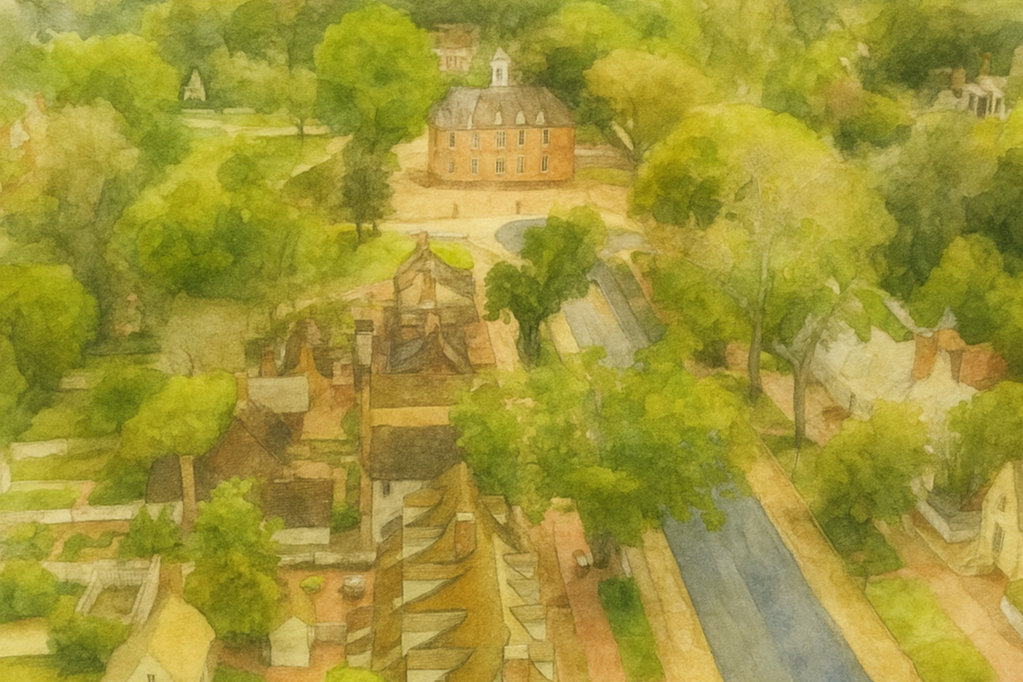
Williamsburg
Williamsburg became Virginia’s capital in 1699, named after King William III. It replaced the former capital, Jamestown, due to concerns about health, fire hazards, and flooding. The town quickly grew around the Capitol building, becoming the political, religious, and educational hub of the colony. Williamsburg became a center of politics, education, and culture—with the College of William & Mary and the Governor’s Palace at its core. In 1760, Williamsburg established the Bray School, which is recognized as the oldest surviving building in the United States dedicated to educating Black children. Williamsburg played a significant role in the American Revolution, hosting figures such as George Washington, Thomas Jefferson, and Patrick Henry.
After the capital moved to Richmond in 1780, Williamsburg declined and many buildings fell into disrepair. The city remained tied to the plantation economy of Virginia, and enslaved people continued to serve in domestic and skilled labor roles well into the 19th century. In the early 20th century, John D. Rockefeller Jr. and the Colonial Williamsburg Foundation began an ambitious restoration to preserve and reconstruct the historic district. The project meticulously restored streets, homes, shops, and public buildings, guided by extensive research into 18th-century life. Today, Colonial Williamsburg features costumed interpreters, historic trades, and educational programs that bring colonial America to life, attracting millions of visitors annually.
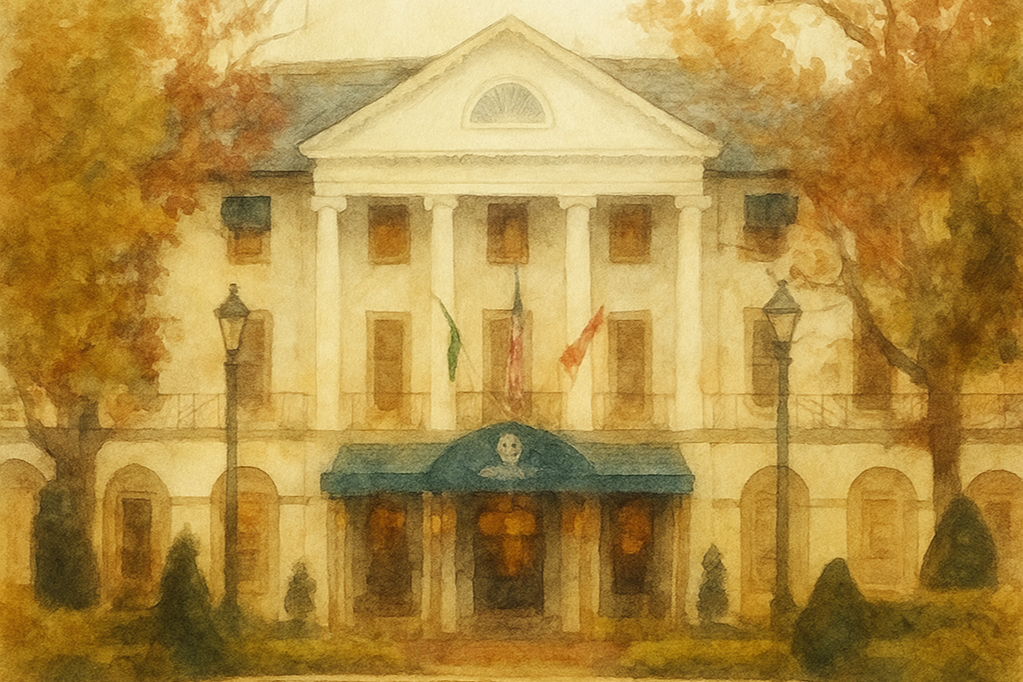
Williamsburg Inn
The Williamsburg Inn was built in 1937 as part of John D. Rockefeller Jr.’s vision to restore and revitalize Colonial Williamsburg. Designed in the Colonial Revival style, the Williamsburg Inn followed Rockefeller’s desire for a world-class hotel that was not a plantation and would provide luxurious accommodations while complementing the historic setting. It attracted distinguished guests, including Queen Elizabeth II, Sir Winston Churchill, Dwight D. Eisenhower, Salvador Dalí, Emperor Hirohito of Japan, and Betty White – just to name a few. In 2017, it completed a major restoration to mark its 80th anniversary, blending 18th-century-inspired design with modern luxury. Today, the Williamsburg Inn continues to represent Rockefeller’s original vision of combining history, education, and world-class comfort.
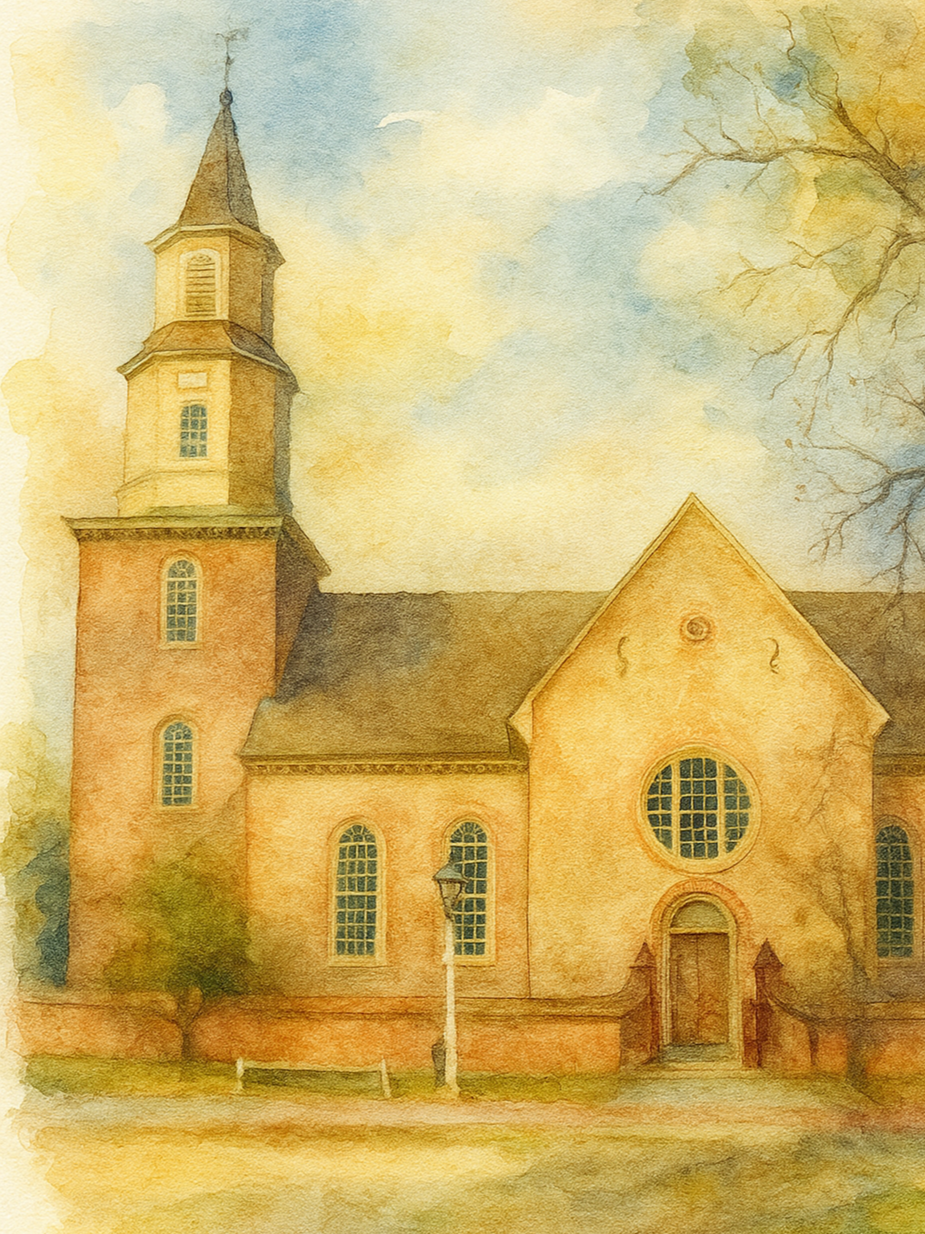
Bruton Parish
Bruton Parish Church is one of the oldest Episcopal churches in America. It was established in 1674 by the consolidation of two earlier parishes, Middle Plantation and Marston. The present brick building, completed in 1715, was designed in the form of a Greek cross to serve the growing capital. During the colonial era, it became the spiritual home for many prominent Virginians, including George Washington, Thomas Jefferson, and Patrick Henry. The church played a central role in the community, hosting both worship and political gatherings. After the American Revolution, its influence declined as Williamsburg lost prominence (no longer the capital of Virginia) and the building fell into disrepair. In the late-19th century, preservation efforts revived interest in the church’s history and architecture. Today, Bruton Parish remains an active congregation, while also serving as a historic site.
William & Mary
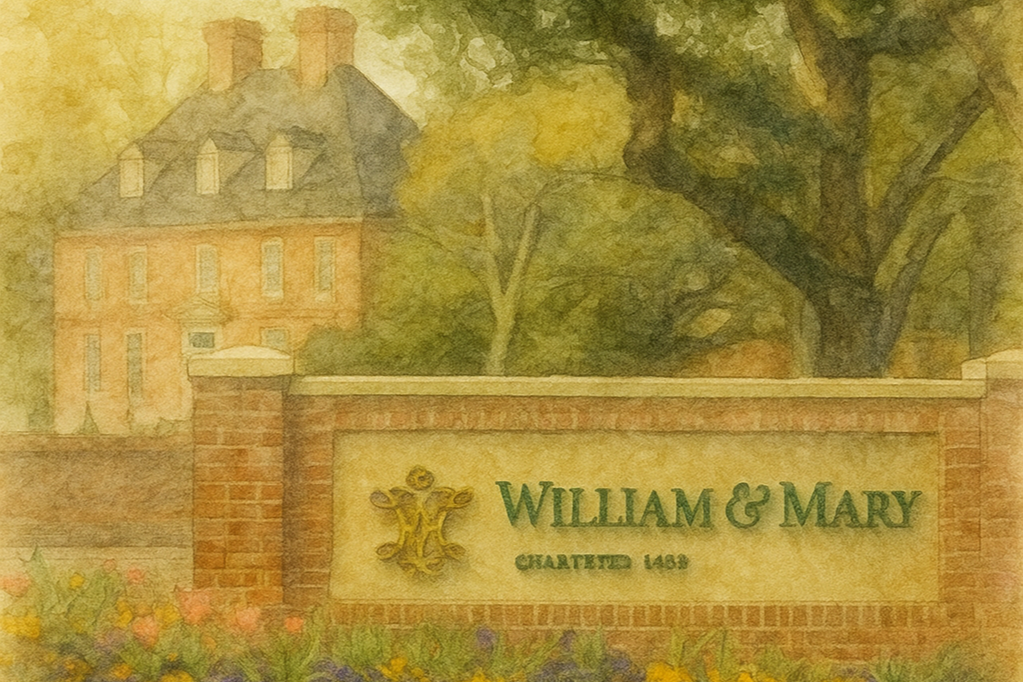
Founded in 1693 by royal charter from King William III and Queen Mary II, William & Mary is the oldest university in the United States. It was established to educate Anglican clergy and civil leaders for the colony of Virginia. In 1700, William & Mary completed the Wren Building, the oldest surviving college building in the nation. From its beginning, William & Mary relied on the labor of Black people who worked tobacco fields in Virginia and Maryland; they are honored alongside other slaves at Hearth: Memorial to the Enslaved on campus. The college played a major role in the American Revolution, with alumni such as Thomas Jefferson, James Monroe, and John Tyler later becoming presidents. In 1779, under Jefferson’s influence as governor, William & Mary created the nation’s first law school – and alumni Chief Justice John Marshall’s statue can be found there. During the Civil War, the college closed for several years and its campus was badly damaged from fires. The college reopened in the late 19th century. It became the first public university in Virginia to admit women in 1918, and it started admitting Black students much later in 1964. The 20th century brought continued expansion, modernization, and recognition as a leading liberal arts institution. Today, William & Mary is known for its rigorous academics, historic campus, long-standing traditions, public service, and notable alumni like Mike Tomlin, Sean McDermott, Glenn Close, Patton Oswalt, Jon Stewart, James Comey, Jill Ellis, Bob Gates, Jen Psaki, and Cord Jefferson.